A bright listing photo taken beside a window tells you little about whether you can work at the back of the living room or read comfortably in the afternoon. If daylight matters to your choice of Abu Dhabi apartment, check the same room twice and judge it against an activity you actually do there.
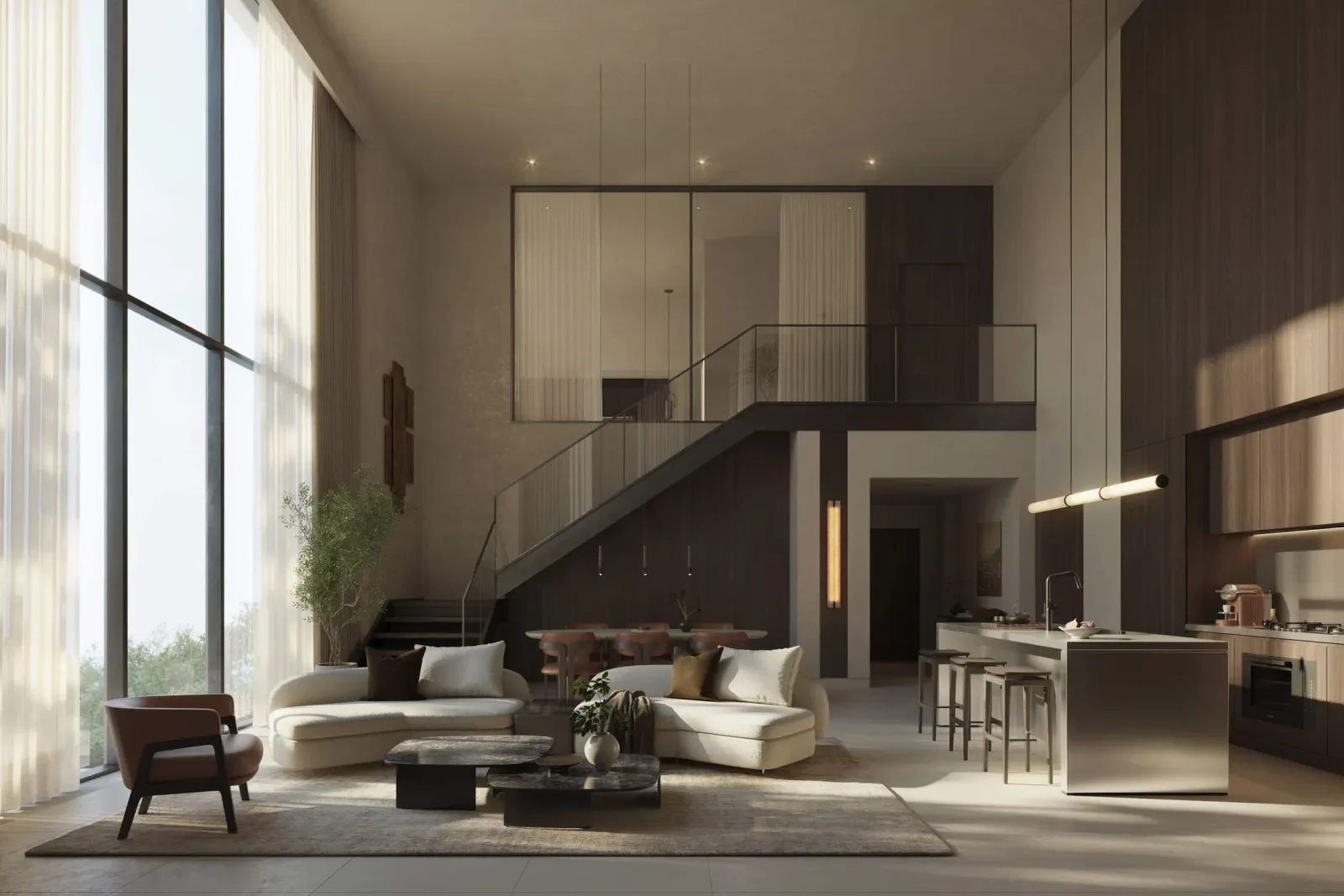
Sei Saadiyat promotional living room image from the source library. It is not a measured daylight result, compass orientation or photograph of the flat you are viewing. Image source: Knownable image library, source: Abu Dhabi Off Plan.
Find the relevant window
Ask for the exact unit and identify which direction its main glazing broadly faces, if the plan or map can establish it. Note deep balcony roofs, side walls and nearby buildings that sit directly in front of the glass. A corner living room may behave differently at each window. The U.S. Department of Energy's daylighting guidance notes that heat and glare can be harder to control on east- and west-facing windows. Use that as a reason to observe the relevant window, not as a verdict on a particular unit.
Repeat the same small test
If the agent can arrange it, visit earlier and later on the same day, or at the two times you expect to use the room most. With permission, turn off the lights and put the blinds in the same position for both visits. From the intended sofa or desk, ask three questions: can I comfortably read here, is direct sun hitting the spot, and is the window bright enough to be distracting from here? Then try the normal blind setting you might actually use.
Write the time, weather, room and blind position in your notes. If taking photographs is allowed, use the same position and frame. A phone camera can brighten a dark room automatically, so use the picture to remember where light fell, rather than as a brightness reading. If you are comparing two units, repeat the same check in the equivalent room when possible.
Keep the conclusion narrow
There is room for both preferences. A patch of direct sun in a breakfast area may be welcome, while a bright reflection where a monitor would sit could change your furniture plan. Record the actual decision: “Late visit: direct sun reached the proposed desk; moving it to the inner wall removed the reflection in that visit.”
Cloud cover, seasonal sun position and changes outside the building can make another day look different. Two visits are enough to expose useful differences, not to establish year-round daylight, cooling cost or future views. If you can only visit once, choose the hour most important to you, and leave other times marked as untested.
Source and scope
U.S. Department of Energy: Natural Light and Daylighting. The viewing steps are practical observations, not an inspection or certification.