Al Ain Oasis offers more than a photograph beneath the palms. Pair time on its paths with the Eco Centre and you can connect the landscape you see with the irrigation system that supports it.
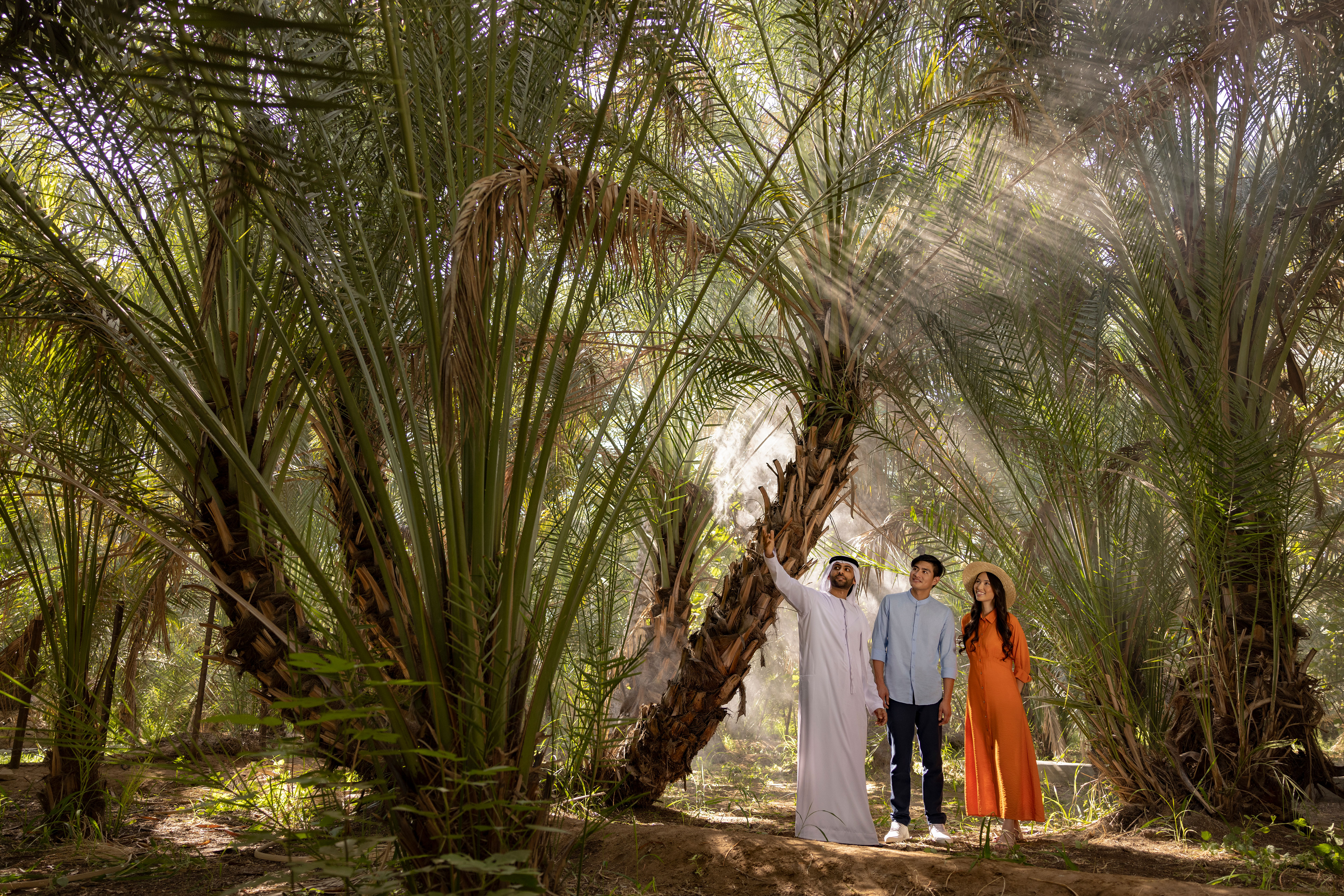
Source image published by Department of Culture and Tourism Abu Dhabi. It does not establish current access or availability. Image source and publisher credit.
Start with a question about water
The official tourism guide, checked on 9 November 2026, describes the oasis's falaj irrigation channels and shaded pathways. It also warns that water in the channels can disappear and reappear depending on the season.
That qualification is useful when planning the visit. A dry section does not by itself establish that the system has been abandoned, and a photograph showing flowing water does not promise the same scene on your date.
Look at how a visible channel relates to the adjacent planting and paths. Keep observations small and specific: where the channel is, whether water is visible at that point and what you can see from the visitor route. There is no need to turn one observation into a claim about the whole oasis.
Use the Eco Centre to interpret what you saw
The Eco Centre provides interpretation of the oasis and its history. If you visit it first, take one question onto the paths. If you walk first, use the centre to investigate something that caught your attention.
For children, a simple task is to connect one feature in a display with one feature outdoors. That gives the visit a purpose without requiring a long walk or a complete tour of the site.
Choose the way you want to explore
The tourism page distinguishes walking the grounds from additional services such as bicycle or buggy hire and guided tours. Check what is operating on your date and where any hired service starts and finishes. A mention on a destination page does not reserve it for you.
Use the actual entrance for your return plan. Avoid a route that depends on an unconfirmed hire service bringing you back to a different gate. The aim is an outing that leaves room to notice the working landscape, rather than simply covering as much ground as possible.